
The government on Thursday decided not to increase petrol and diesel prices, and issue oil bonds worth Rs 23,457 crore (Rs 234.57 billion) to partly compensate public sector oil companies for the losses incurred on fuel sales."We have kept our promise of not raising prices of sensitive petroleum products," Petroleum Minister Murli Deora told PTI after a meeting of the Cabinet.
In a marginal relief to consumers, IndianOil, the biggest oil marketing company, has cut petrol prices by Rs 0.56 per litre with effect from midnight today.
The average price of Indian basket of crude oil during 2007-08 (upto August) has increased to $68.34 per barrel as compared to 62.46 dollars a barrel during 2006-07.
The government has directed state-run fuel retailers Indian Oil, Bharat Petroleum and Hindustan Petroleum to clear the wait list for domestic LPG connection within the next two months.
The drop in international oil prices has resulted in revenue loss of Indian Oil, Bharat Petroleum and Hindustan Petroleum dip to Rs 400 crore per day from Rs 450 crore (Rs 4.5 billion) a fortnight back. The basket of crude oil India buys averaged $111.09 a barrel in the second fortnight of August as compared with $117.37 per barrel in the first fortnight of the month.
Losses on sale of diesel at government-controlled rates have hit a record Rs 19.26 a litre, sending state-owned oil companies scrambling for ways to cover the mounting losses.
Profits of the country's oil marketing companies - Indian Oil Corporation, Bharat Petroleum Corporation and Hindustan Petroleum Corporation - fell by as much as 29 per cent in 2007-08 in spite of an up to 56 per cent rise in the oil bonds these companies received during the year compared with 2006-07.
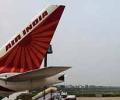
"Air India is unable to pay even after a 90-day credit period. They owe us about Rs 300 crore without interest. There is also no bank guarantee from Air India to any of the oil marketing companies. We do not know when will the company honour its dues," said a BPCL official on condition of anonymity.
This is to compensate for their under-recoveries on the sale of petroleum products during the current financial year. Indian Oil Corporation has been issued oil bonds worth Rs 5,817.27 crore, while Bharat Petroleum Corporation has been issued bonds worth Rs 2,144.32 crore. Hindustan Petroleum Corporation has got bonds worth Rs 2,038.41 crore. Prior to this, bonds worth Rs 60,967 crore had already been issued.

Bharat PetroResources, a wholly owned subsidiary of BPCL and Videocon Industries, holds 40 per cent of the block. Brazil's Petrobras holds the remaining 60 per cent.
A higher government borrowing will 'crowd-out' the private borrowing and push interest rates higher.
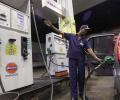
Petrol price in Delhi was hiked to Rs 77.28 per litre from Rs 76.73, while diesel rates were increased to Rs 75.79 a litre from Rs 75.19, according to a price notification from State oil marketing companies. Rates have been increased across the country and vary from state to state depending on the incidence of local sales tax or VAT.
Vijay Mallya-owned Kingfisher Airlines owes state-run oil companies over Rs 950 crore (Rs 9.50 billion0 in unpaid fuel bills while financial crisis-hit NACIL has cleared almost two-thirds of its outstanding.
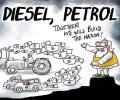
Petrol and diesel prices are unlikely to be increased despite firming raw material costs because of upcoming general elections next year, Moody's Investors Service said. Three state-owned fuel retailers -- Indian Oil Corporation (IOC), Bharat Petroleum Corporation Ltd (BPCL) and Hindustan Petroleum Corporation Ltd (HPCL) -- which control roughly 90 per cent of the market, have kept petrol and diesel prices on freeze for a record 18 months in a row. This is despite the raw material (crude oil) cost surging last year, leading to heavy losses in first half of 2022-23 fiscal year before easing oil prices propelled them to profitability.

Getting compensated for at least 90 per cent of losses without government subsidy appears difficult.

Public sector oil marketing company Indian Oil Corporation (IOC) will raise prices of petrol by 27 paise a litre, - for the first time since decontrolling petrol prices.
OMCs losing Rs 20 crore daily on sales, 18 months after prices were deregulated.
Several members of Parliament have opposed privatisation of public sector oil firms like IOC and have asked the government not to seek a review of the Supreme Court verdict halting privatisation of HPCL and BPCL, Petroleum Minister Ram Naik said.
While Indian Oil Corporation will get the highest Rs 5,817.27 crore (Rs 58.17 billion) of special bonds, Bharat Petroleum Corporation Ltd will receive Rs 2,144.32-crore (Rs 21.44 billion) bonds and Hindustan Petroleum Corporation Ltd will be issued bonds worth Rs 2,038.41 crore (Rs 20.38 billion). The bonds will carry an 8 per cent coupon rate and will mature in 2026, the government said in a statement.

Petrol prices were freed from government control last month, resulting in a Rs 3.50 per litre rate hike in Delhi.

The Centre could further moderate its divestment target for 2024-25 (FY25), as it does not expect large receipts from asset sales - except some ongoing strategic ones, including IDBI Bank, which could spill over into next financial year. Also, it may drastically reduce its FY24 divestment target of Rs 51,000 crore. "We are still evaluating the Budget estimates for FY25. "New big-ticket asset sales are unlikely.
State-run Indian Oil Corporation, Hindustan Petroleum and Bharat Petroleum currently sell petrol, a commodity which the government freed from its control in June last year, at a discount of about Rs 4.50 a litre to its imported cost.
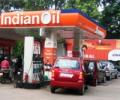
IOC and its sister PSUs, Hindustan Petroleum and Bharat Petroleum, sell diesel, domestic LPG and kerosene at rates way lower than their imported cost to help government keep general price inflation under check.
The petroleum ministry has sought additional oil bonds worth about Rs 13,000 crore (Rs 130 billion) to cover the revenue loss on fuel sale in the fourth quarter of the current fiscal.

Kaushik Basu, chief economic advisor in the finance ministry, said, "All I can say is, we are very serious about fiscal consolidation, and intend holding on to our fiscal targets, even if the crude price rises on a sustained basis."
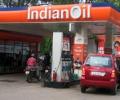
State-owned fuel retailers, which last week raised petrol price by Rs 1.80 per litre, reported a net loss of over Rs 8,000 crore (Rs 80 billion) in July-September quarter and are borrowing heavily to even buy crude oil.
Over 100 chemical storage tanks built at the Pirpav jetty near Chembur have been operating without approvals from the ministry of environment and forests for over 18 years. Each of these tanks has an average capacity of 200,000 kilolitres of oil.

Indian Oil Corporation (IOC), Bharat Petroleum and Hindustan Petroleum may post a combined loss of Rs 10,700 crore in June quarter on selling petrol and diesel at rates below cost, a report said on Monday. While the raw material (crude oil) prices soared in April-June, petrol and diesel prices were not revised, leading to marketing losses which offset strong refining margins, ICICI Securities said in the report. The three state-owned oil marketing companies -- IOC, BPCL and HPCL -- control 90 per cent of the retail petrol and diesel sales in the country.
The Union oil ministry is considering a proposal to adopt differential pricing for diesel, under which industrial users like power utilities, will be charged market prices and retail consumers continue to be subsidised.
Higher crude oil prices have almost doubled the under-recoveries of government-owned oil marketing companies -- Indian Oil Corporation, Bharat Petroleum and Hindustan Petroleum -- in the past three years.
The bonds will help oil marketing companies - IOC, HPCl, Bharat Petroleum and IBP Ltd - to cover their under-recoveries.
The combined debt of Indian Oil, Bharat Petroleum and Hindustan Petroleum has risen to Rs 115,000 crore (Rs 1,150 billion) as they borrowed to make up for revenue losses on fuel sales during the first half of the current fiscal.

IOC and other state retailers had on September 16 raised jet fuel price by 2.5 per cent.
A series of rises in petrol price following its decontrol on June 25 last year has increased the state governments' earnings from value added tax on petrol by around 21 per cent.
The government on Wednesday said there was no proposal to either merge Hindustan Petroleum and Bharat Petroleum with Oil and Natural Gas Corp or Oil India Ltd with Indian Oil Corporation.

There has been a sharp recovery in the headline corporate earnings in the April-June 2023 quarter (Q1FY24), after a dismal showing by early bird companies. The combined net profit of the 983 listed companies that have declared their quarterly results, so far, was up 64.7 per cent year-on-year to record a high of Rs 2.68 trillion in the first quarter, but growth in earnings remained lopsided because most of the incremental gains came from a handful of companies. Moreover, the quarterly numbers showed a continued slowdown in revenue growth.
